
Ask ten installers how long a garage floor coating lasts, and you’ll probably hear ten different numbers. Some will promise forever, and others will hedge, but neither answer helps much when you’re standing in your garage trying to decide whether this is worth the money.
Here’s what we tell homeowners. A polyurea garage floor coating that’s installed correctly typically gives you 15 to 20 years, and plenty of floors go longer. Most epoxy and painted floors don’t come close.
What separates the 20-year floor from the three-year floor? It mostly comes down to things you can’t see once the job is done.
How Long Does a Polyurea Garage Floor Coating Last?
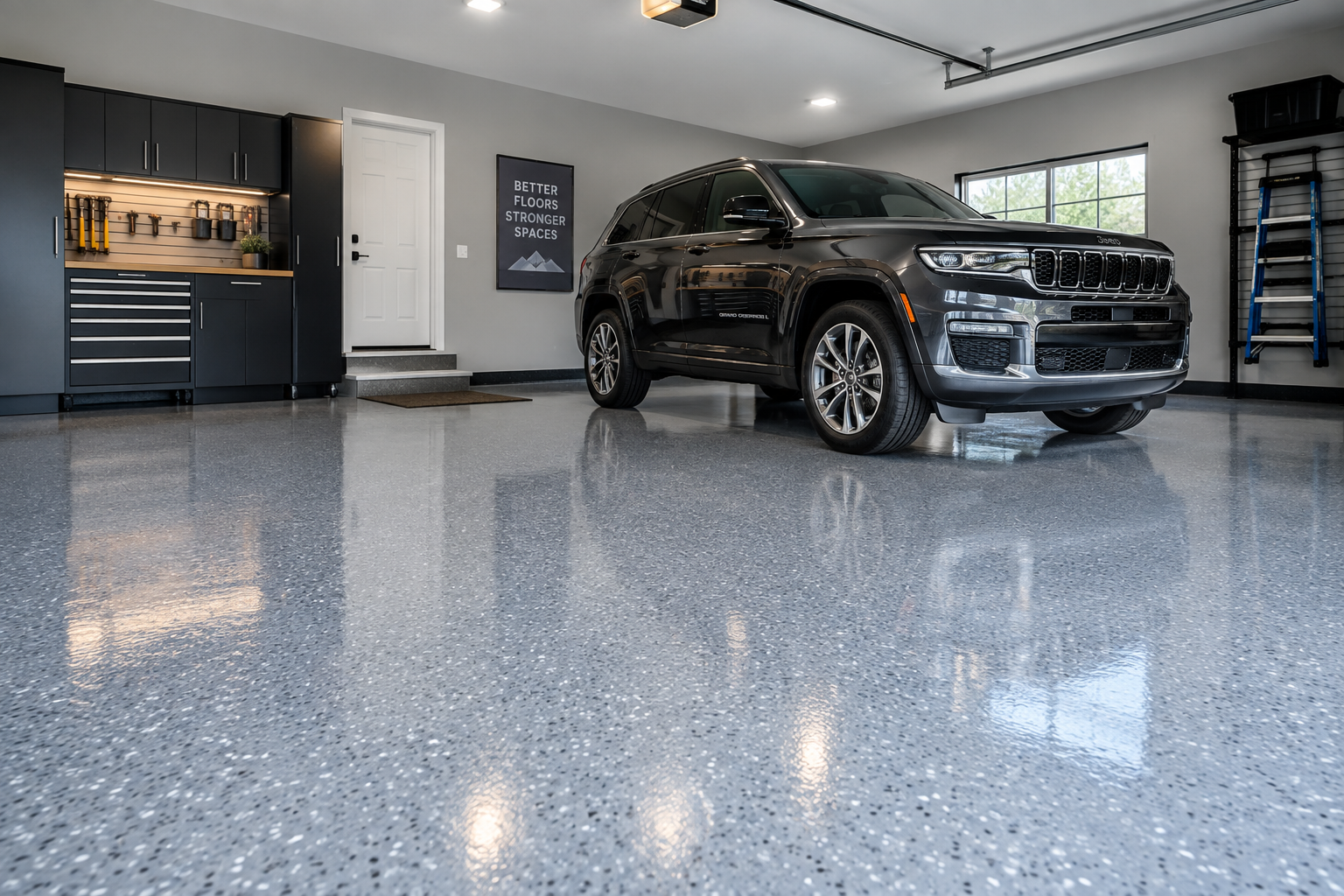
Plan on 15 to 20 years or more from a professionally installed polyurea and polyaspartic system in a typical home garage. Reputable installers usually back that up with a long-term warranty against peeling and delamination.
Why Polyurea Holds Up So Well
Polyurea started out in heavy-duty industrial work, things like truck bed liners and tank linings. It flexes slightly as your concrete slab expands and contracts, so it won’t crack the way stiff coatings do.
Topped with a polyaspartic clear coat, it won’t yellow in the sun. Salt, oil, gasoline, and antifreeze barely bother it. The bond is strong too, provided the concrete has been ground properly first.
What “Lifespan” Really Means
Here’s something most people don’t think about. A floor can lose a bit of its shine and still be doing its job perfectly. Fifteen years of tires and boots will leave some light scuffs, and that’s normal.
Failure looks different. You’ll see peeling, lifting, blisters, or patches of bare gray concrete. Those are the signs that matter.
What Affects the Lifespan of a Garage Floor Coating?
Two neighbors can buy the exact same product and end up with very different floors ten years later. Here’s why:
Surface Preparation
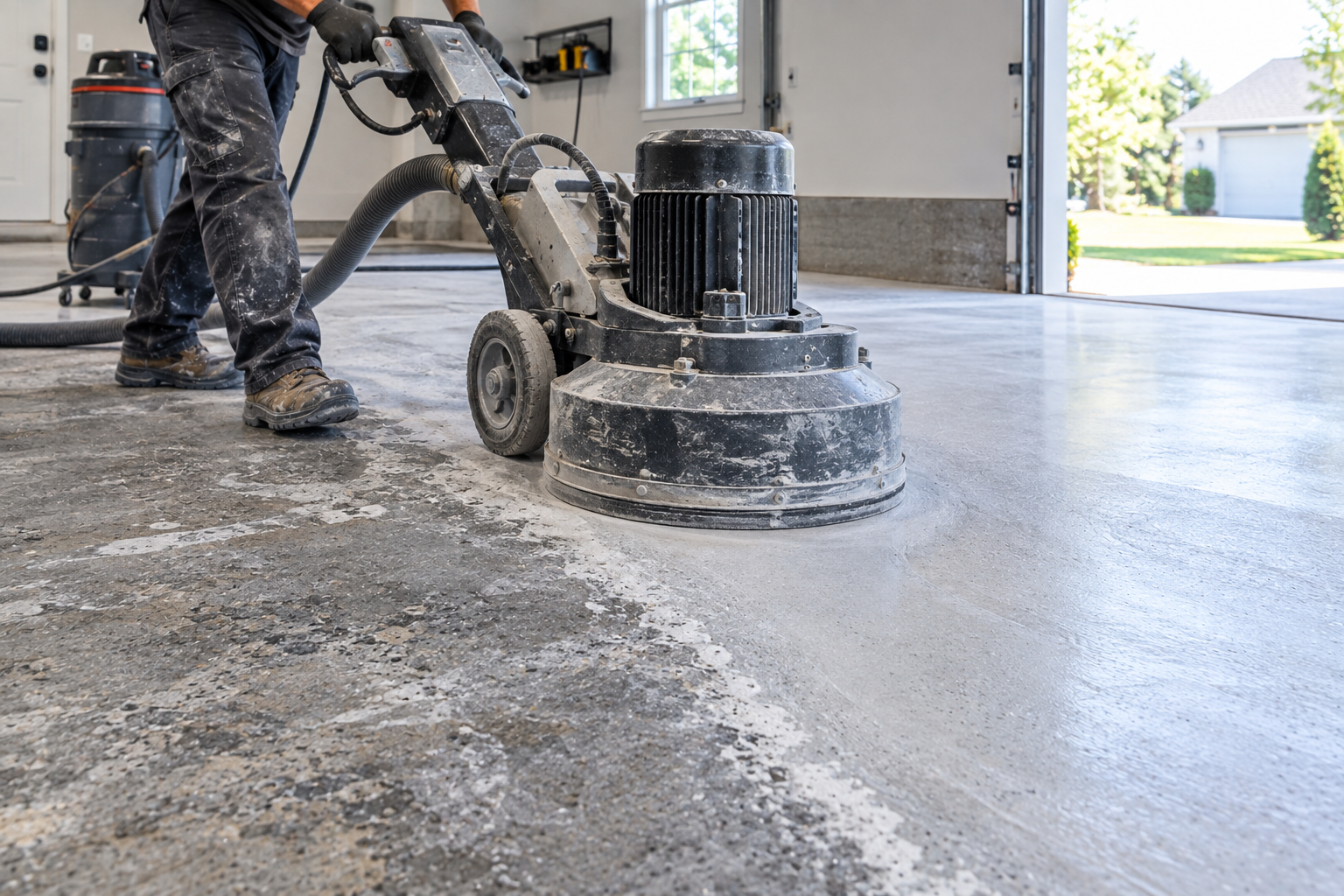
Prep matters more than the product. A good crew spends a big chunk of installation day diamond grinding the slab. That grinding strips away old sealers and weak surface material, leaving a rough texture the coating can actually grab onto.
DIY kits usually tell you to acid etch and rinse instead. It’s cheaper and easier, but it rarely gets the concrete clean or open enough. Most of the peeling floors we’re called out to fix trace back to this step.
Installation Quality
Polyurea sets up fast. That’s the reason a one-day garage floor coating installation is possible, and it’s a big plus for anyone who doesn’t want their cars sitting in the driveway all week.
Fast curing has a catch, though. The crew has to know what they’re doing. Cracks need repairing before anything goes down, the material has to be mixed and spread at the right pace, and the coats need enough thickness.
Get any of that wrong, and you’ll end up with thin spots, bubbles, or a weak bond.
Moisture and Concrete Condition
Concrete looks solid, but it breathes. Moisture vapor works its way up through the slab, and too much of it can push a coating loose from underneath. Older slabs, slabs poured without a vapor barrier, and basements are the usual trouble spots.
The flooring industry takes this seriously enough to have a formal test for it. Any installer worth hiring should check moisture and look over cracks, pitting, and old patch jobs before quoting your floor.
UV Exposure
Lots of people leave the garage door open on nice days. Epoxy hates that. Sunlight slowly turns it yellow and chalky, and the damage is usually the worst right inside the door where the light hits. A polyurea floor with a polyaspartic topcoat doesn’t have that problem.
Vehicle and Foot Traffic
A one-car garage that mostly holds lawn chairs won’t wear like a three-car garage with two commuters and a weekend woodshop. Hot tires can also cause trouble on cheaper coatings. The rubber softens the finish on the drive home, then pulls it up as it cools.
Polyurea resists that well. A dropped jack stand or a dragged toolbox can still leave a mark on any floor, though.
Chemicals and Road Salt
Anyone who’s lived through a Northwest Indiana winter knows the drill. Your car comes home caked in salty slush, it melts on the floor, and it sits there for weeks.
Chloride deicing salts break down bare concrete over time. Polyurea shrugs off salt, oil, gasoline, and antifreeze. Brake fluid and some solvents are harder on any coating, so wipe those up the same day.
Climate and Temperature Swings
Winters here follow a pattern: freeze, thaw, repeat. Concrete in La Porte, Valparaiso, Crown Point, and Michigan City goes through that cycle dozens of times a year. Water expands about 9 percent when it freezes, and that pressure builds up inside the pores of the concrete.
A stiff coating can crack or lose its grip as the slab moves. Polyurea bends a little instead of breaking, which is a big part of why it lasts so long in Midwest garages.
Maintenance Habits
Care makes a difference too. A floor that gets swept and rinsed now and then will look better at year 15 than one that has spent a decade under grit and road salt. The good news is that the upkeep is easy..
How Polyurea Compares to Other Garage Flooring Options
Here’s how the most common options stack up. These are rough ranges for a typical home garage, and your results will depend on prep, climate, and how you treat the floor. Polyurea sits at the top of the list, which is the main reason Fortress Concrete Coatings specializes in it.
| Flooring Option | Typical Lifespan | UV Resistance | Main Drawback |
| Professional polyurea or polyaspartic | 15 to 20+ years | High | Higher upfront cost than DIY options |
| Interlocking tiles | 10 to 20 years | Moderate to high | Liquids can seep underneath |
| Professional epoxy | 5 to 10 years | Low | Rigid and prone to yellowing |
| DIY epoxy kit | 2 to 5 years | Low | Thin coat with a weak bond |
| Garage floor paint | 1 to 3 years | Low | Peels under hot tires |
| Sealed bare concrete | 1 to 3 years per sealer coat | Varies | Stains easily and needs frequent resealing |

Polyurea vs. Epoxy Garage Floors
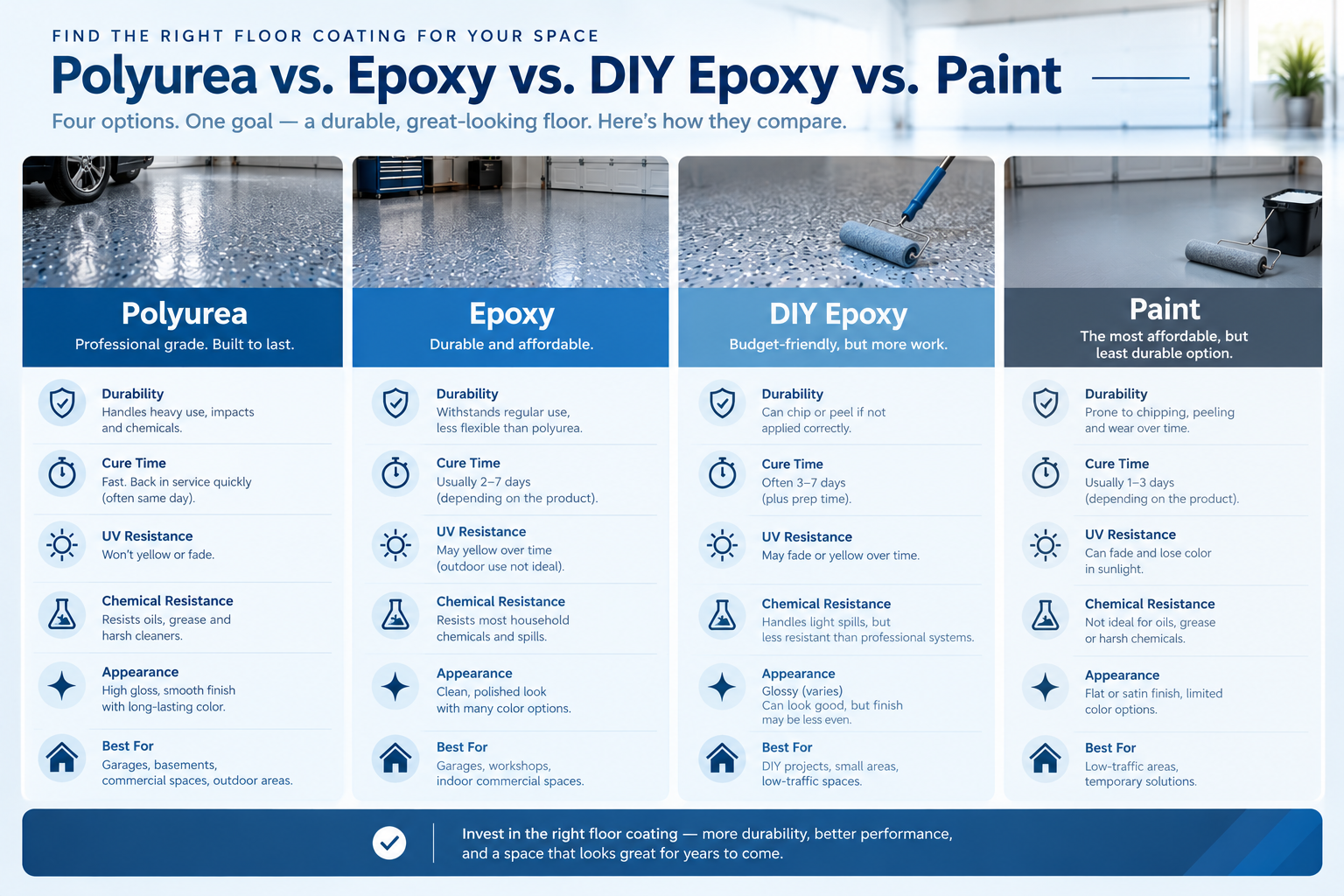
Plenty of people search for “epoxy floors near me” when what they really want is a tough garage floor coating. Epoxy is just the name everyone knows, but it isn’t the best choice for a garage in this part of the country anymore.
The trouble is that epoxy cures hard and stiff. Concrete moves through freeze-thaw cycles, and a stiff coating eventually cracks or lets go. Epoxy also yellows in sunlight, while polyurea stays flexible, holds its color, and handles road salt without complaint.
That’s why we don’t install epoxy. Every floor we put down is a polyurea system.
Looking at Long-Term Value
Cheap floors get expensive. Paint might cost a fraction of a professional coating, but redoing it every couple of years adds up fast. One good polyurea floor often costs less over 15 years than three or four rounds of the budget option, and you skip the hassle of emptying the garage each time.
Signs Your Garage Floor Coating Needs Repair or Replacement
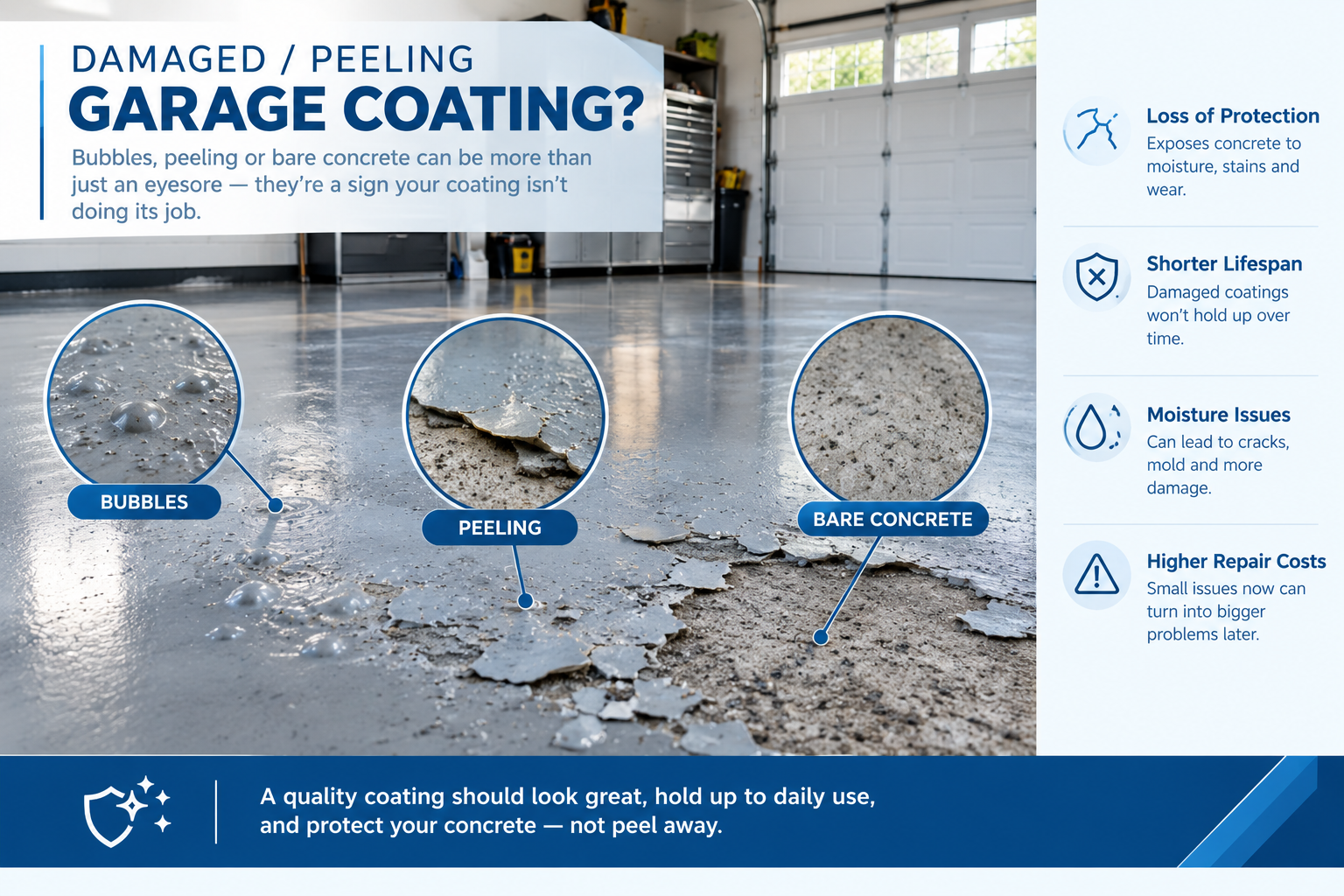
Most coatings give you some warning before they fail. Take a walk around your garage and look for these:
- Peeling or lifting at the edges – often near the door or along the tire paths
- Bubbles or blisters – usually a sign of moisture coming up through the slab
- Patches of bare concrete in worn or chipped spots
- Cracks running through the coating itself
- Stains that won’t come out with normal cleaning
- A yellow or chalky look which shows up on older epoxy floors
- Spots where hot tires pulled the coating up
A few small chips aren’t a big deal, and they can usually be patched. Peeling across large areas is another matter.
That usually calls for full garage floor resurfacing, which means grinding off the old coating and starting over the right way. Many homeowners with failing epoxy floors use that moment to switch to polyurea.
Practical Tips to Extend the Life of Your Garage Floor Coating
Polyurea is about as low-maintenance as flooring gets. A few habits still go a long way:
- Sweep or dust mop about once a week, since grit acts like sandpaper under your shoes.
- Hose off salt and slush every week or two during winter.
- Clean with a pH-neutral cleaner and a soft mop or deck brush.
- Skip harsh acids, bleach, and citrus degreasers.
- Wipe up oil, brake fluid, and solvent spills the day they happen.
- Set a mat or scrap of plywood under jack stands and motorcycle kickstands.
- Put felt or rubber pads under shelves, workbenches, and toolboxes.
- Lift heavy or sharp items instead of dragging them.
- Call for an inspection at the first sign of lifting or blistering.
A Simple Winter Routine
Winter is hard on every garage floor around here. Keep a floor squeegee by the door and push the melted slush outside after each storm.
Every couple of weeks, rinse the floor with warm water and a little mild cleaner. That keeps salt residue from building up and dulling the finish.
Questions to Ask Before You Hire an Installer
The product only performs as well as the crew putting it down. A quick search for “garage floor coating near me” will turn up a long list of companies, and they aren’t all the same. Ask these questions before you sign anything:
- Do you diamond grind the concrete before coating?
- Do you test for moisture and repair cracks first?
- Which products and topcoat do you use?
- What does your warranty cover, and for how long?
- Can you show me photos or references from local jobs?
A good company will answer these without hesitating. Vague answers about prep or the warranty are a red flag.
Get a Professional Evaluation From Fortress Concrete Coatings
Fortress Concrete Coatings installs polyurea garage floor coatings for homeowners across Northwest Indiana and Southwest Michigan. We work in Valparaiso, Chesterton, Portage, Crown Point, Merrillville, Schererville, La Porte, Michigan City, Plymouth, Warsaw, New Buffalo, St. Joseph, and nearby towns.
Every job starts the same way. We look closely at your concrete, check for moisture and cracks, and grind the slab properly before any coating goes down. Polyurea is all we install, and we coat patios and basements with the same care.
Do you have questions about lifespan, timing, or price? Take a look at our garage floor coating services, or reach out to Fortress Concrete Coatings to set up an evaluation and get a quote.
